
Guinea Pig Awareness Week
This week is Guinea Pig Awareness Week, a good opportunity to learn more about these cute little creatures and how to look after them.
Let’s start with a few facts you may not know ...

Guinea pigs originate from the grasslands and lower slopes of the Andes Mountains in South America.
In the wild, Guinea pigs live in groups which tend to comprise of an alpha male, 3 to 4 females and their offspring.
Guinea pigs are cautious and approach unfamiliar Guinea pigs with a stretched posture, making contact with their whiskers only. This posture allows them to move away rapidly if required.
Guinea pigs shouldn’t be kept with rabbits, as they have different housing and feeding needs.
Guinea pigs are not very agile and are poor climbers.
Whilst they do not dig or make burrows themselves, they use natural shelters, dense vegetation or the burrows of other animals as refuges.
Guinea pigs are active for up to 20 hours a day, and only sleep for short periods.
Guinea pig health checks
If you are keeping guinea pigs, they should be checked regularly for signs of illness or injury.
Check their front teeth and nails weekly – these grow quickly. Only vets should correct overgrown/misaligned teeth.
In warm weather, it's important to check the fur and skin around their rear end twice a day. Urine staining and droppings stuck attract flies and can lead to flystrike.
Take them for vet check-ups at least once a year.
Get them treated for parasites such as mites and worms as advised by your vet.
Only use prescribed medicine – only give your guinea pigs the medicines recommended for them by a vet. Other animals' medicines are dangerous to them.
It's important to remember that although Guinea pigs feel pain, they don't show any outward signs of it, so they may suffer before you notice they're sick. If you notice changes in their normal behaviour, these can be an early sign of illness.
They may be unwell if they're:
Not eating.
Quieter than normal.
Hiding more than usual.
Stressed Guinea pigs are more likely to become ill. Ask your vet immediately if you suspect they're in pain, ill or injured.

Guinea pigs need friends
Guinea pigs like living with their own kind, they are highly social animals.
They are happiest in pairs or small groups – litter mates make good companions. If you’re planning on keeping males and females together, the males should be neutered to avoid unwanted pregnancies.
Companionship provides social interaction, helping to prevent loneliness and reduce stress. Interacting with other Guinea pigs helps them develop communication skills, learn social boundaries, and stay active. Guinea pigs are herd animals and rely on their group for safety and social structure. While human interaction is important, it cannot fully replace the social needs that another Guinea pig can fulfill.
Never keep Guinea pigs with rabbits or chinchillas as they have different housing and nutrition requirements. Bullying can also occur between species and rabbits can give guinea pigs serious diseases.
Guinea pig housing
It is important to provide Guinea pigs with a suitable place to live. They require:
A secure shelter and large exercise area. They should be able to stretch and stand up on their back legs in both. They need to have space to run, forage, and interact with other Guinea pigs. Guinea pigs enjoy pipes to run down, and plenty of places to hide in so they feel secure. They need to feel calm and safe, and be away from other pets.
If keeping them indoors, a dry, well-ventilated space, away from direct heat and draughts. 17–20°C is ideal. Above 26°C can cause heatstroke.
If keeping them outside, a hutch sheltered from direct sun and wind. In temperatures below 15°C, they need to move indoors.
Sufficient bedding throughout their enclosure to keep warm. This should be safe to eat, such as dust-free hay. Avoid fluffy bedding products.
Untreated wooden toys to chew, such as wooden chew blocks or sticks. Avoid plastic toys.
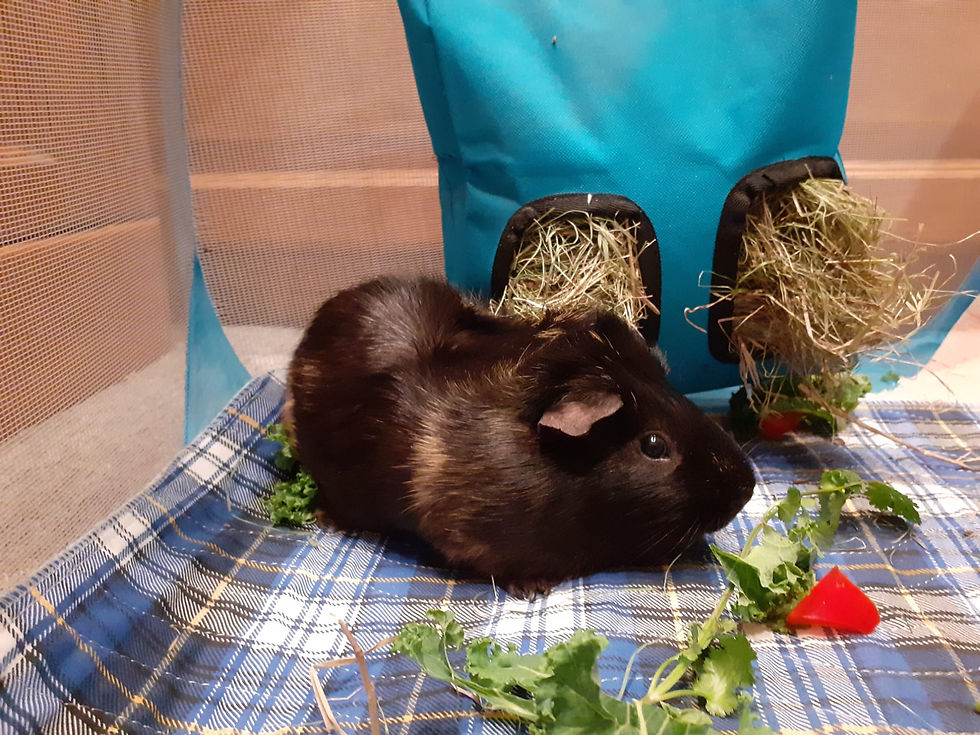
Guinea pig diet
Feeding your Guinea pigs the correct food is essential for keeping them healthy and happy.
Most of their diet should be good-quality hay, and they should always have it available. They need fresh grass too.
Guinea pig teeth are always growing, and eating hay helps wear them down. They also like to gnaw on twigs.
Never feed your Guinea pigs lawnmower clippings, it will upset their digestive systems.
Give them a fresh portion of grass-based guinea pig pellets each day.
Your Guinea pigs need fresh, washed, leafy greens or weeds each day. Visit https://www.rspca.org.uk/adviceandwelfare/pets/rodents/guineapigs/diet to find out what they can and can’t eat.
Make sure they have fresh clean drinking water always available.
Guinea pig behaviour
Guinea pigs should have constant access to:
Social time. Guinea pigs are very social and need to interact with other friendly Guinea pigs. Many also enjoy interacting with people.
Safe hiding places, such as pipes and shelters, where they can go when they want to be alone, hide or escape. Guinea pigs are a prey species and can be easily scared by noise, for example. There should be enough places for all your Guinea pigs to hide at the same time, and they must be away from the sight and smell of predators such as foxes, cats, dogs, ferrets and birds of prey.
Exercise. Guinea pigs are active animals during the day and night, and need to be able to exercise each day to stay fit and healthy.
Tunnels. Guinea pigs like to tunnel, so make sure they have suitable materials that allow tunnelling behaviour, such as pipes and deep areas of hay.
Safe toys to play with and chew.
Calm. Be quiet and gentle around your guinea pig so they don’t become scared.
Space. Make sure their living quarters conform to the correct requirements, we can advise if you are rehoming guinea pigs.
Food and water. Include hay, grass, pellets and greens daily.
A Guinea pig's behaviour depends on age, personality and past experiences. Monitor your pet's behaviour. If it changes, it could be a sign your guinea pig is distressed, bored, ill or injured.
Find out more about Guinea pig health and wellbeing, and how to look after them at https://www.rspca.org.uk/adviceandwelfare/pets/rodents/guineapigs


